
Personal Projects
Hornbills of the Philippines
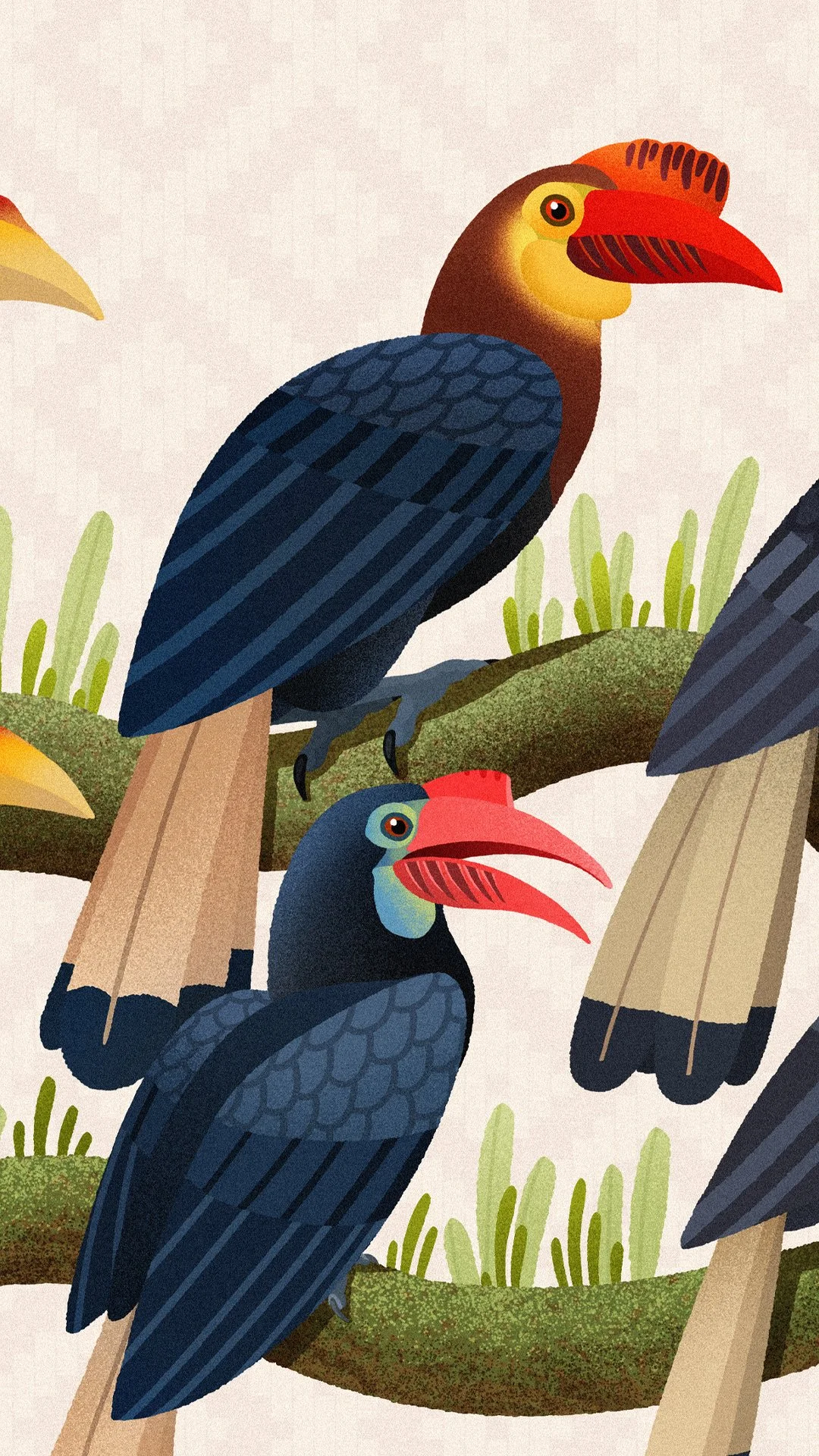
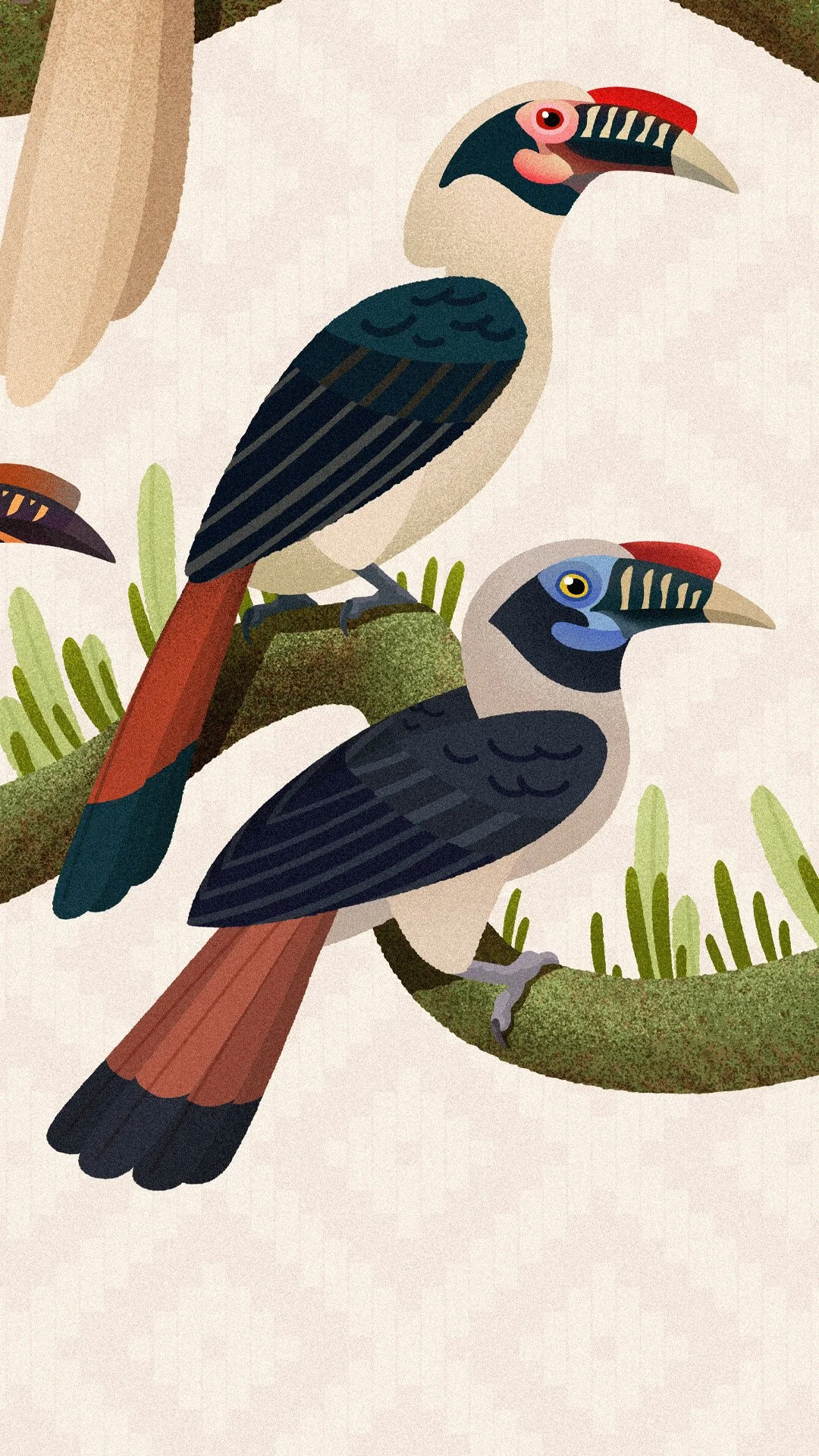
Being cheeky, inquisitive, and cool-looking birds, Hornbills are among the most iconic and most important birds in the Philippines! They are part of many of our indigenous cultures. We see Hornbills in the Ifugao Kango headress and the Moro Kampilan hilt. All of our Hornbills have unique local names and legends, stretching from Luzon, with the iconic Kalaw, to Sulu with their rare Tawsi. Ecologically, they are critical birds that help disperse seeds across our islands, and they help control the populations of smaller animals like insects, lizards, and amphibians, keeping the forests green and healthy for generations to come
I think what boggles my mind is that we have 10 species of Hornbills, all of which are endemic to the Philippines, and found nowhere else in the world. That makes the Philippines the world's center of Hornbill diversity and endemism! What makes the case for the Philippines even more intriguing is that we also have an endemic genus of Hornbills: the adorable Penelopides, aka the "Tariktik" Hornbills. That is a complete branch in the evolutionary tree of life that is only found within our archipelago!
In this illustration, I drew all 10 recognized species of Hornbills found in the Philippines, with both male and female plumages, along with all recognized subspecies so far
This is based on the 2025 AviList, which currently recognizes 10 species, lumping the Northern and Southern Rufous Hornbills into one species (Buceros hydrocorax) and splitting the Mindanao (Penelopides affinis) and Samar Tariktiks (Penelopides samarensis).
I have a feeling this isn't the final word on the definitive number of hornbill species in the country, as further studies are ongoing, hehe I added a couple of annotations explaining how the conservation statuses relate to one another, since both the IUCN and DENR statuses rely on different systems.